Paper envelope message
Thirteen Reasons WhyThe paper-bag notes are small messages left for classmates, but their importance in Hannah’s story lies in the hope they make tangible—and in how Zach’s theft removes that hope. When Hannah’s notes stop appearing, she writes one to herself, stages a careful test, and sees Zach reach into her bag. The object that once carried ordinary encouragement becomes evidence of a breach she cannot dismiss as insignificant.
What the Notes Were
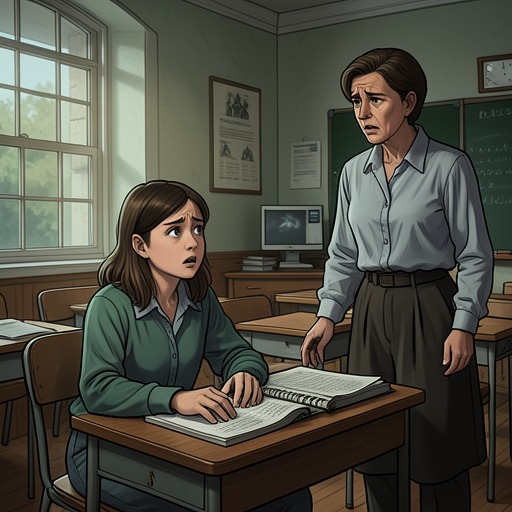
In Mrs. Bradley’s class, students had paper bags on a rack, and classmates slipped encouraging notes into them. Hannah describes a classroom culture in which even an inconsequential change, such as a haircut, could prompt several notes. She believed that people she considered friends would have written to her after she cut off most of her hair. The notes were not grand declarations; their everyday, casual abundance made them a visible sign that someone had noticed.
Hannah connects this practice to her new haircut. After she cut her hair, she expected a note, and when none appeared she began to wonder what was happening. The silence mattered against the classroom’s apparent generosity: if everyone else was receiving notes, her empty bag was not just an absence of paper but a sharp contrast with the attention others seemed to receive.
An Empty Bag and a Note to Herself
Hannah writes herself a message praising her haircut and apologizing for not saying so sooner, adding a purple smiley face. To avoid being caught leaving a note in her own bag, she also writes one for the bag beside hers. After class she makes a show of dropping that other note in, then casually checks her own bag while knowing it will be empty. The act gives her a way to investigate the silence without openly asking anyone to explain it.
The next day, Hannah finds that the note has disappeared and that no note has been left for her. Its disappearance does not by itself establish who took it, but it deepens the force of the absence: even the encouragement she supplied herself cannot remain in the bag. Hannah says she needed the notes and whatever hope they might offer. The paper is slight; the need it represents is not.
The Test and Zach’s Theft
Hannah then arranges a more direct test in Mrs. Bradley’s room during lunch. She removes her bag from the rack and reattaches it with only a tiny sliver of tape, placing a folded note inside. After class she waits outside and watches rather than confronting anyone in advance. The setup converts the paper bag from a routine classroom container into a trap designed to make an otherwise hidden action visible.
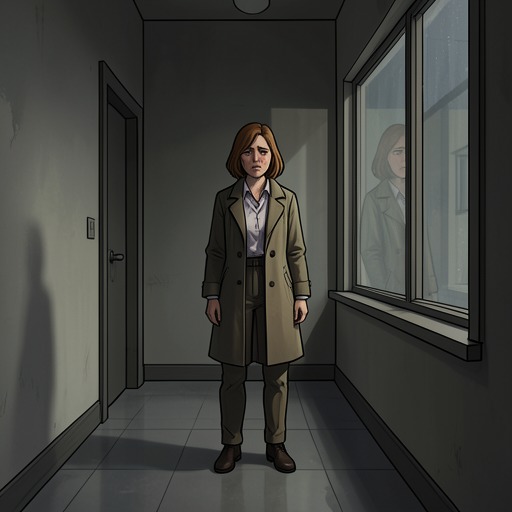
Zach touches the bag’s lip, sees the note, and reaches inside. The bag falls to the floor; his face turns bright red, but he bends down and picks it up. Hannah had expected the possibility and still finds it hard to believe. Although she had planned to confront him immediately, she steps aside. He rounds the corner, meets her face-to-face, and then runs down the hall. Hannah is left alone, trying to understand what happened and why; to her, his flight confirms not an explanation but her sense that she was not worth one.
The revelation also reinterprets the missing notes. Hannah identifies Zach as the person who stole her paper-bag notes of encouragement, and later tells the other tape listeners that the note had been addressed to him by name. She frames it as a prologue to the tapes because it had admitted how much she needed encouragement, and because he took it away. The note that began as a private test thus becomes part of the account she leaves behind.
Significance and Aftermath
The notes’ significance is inseparable from their modest form. They register care through an ordinary exchange that classmates appear to take for granted, while Hannah experiences their absence as evidence that she has been excluded from that exchange. When she stages the test, she is not simply seeking paper: she is trying to discover why a source of hope has vanished. Catching Zach gives her the answer to the theft, but it does not restore the encouragement or produce an explanation.
That distinction matters to Hannah’s account of the harm. She recognizes that Zach might not have considered the theft a serious act, yet insists that she needed the notes and any hope they might have offered. The consequences, as she describes them, are personal and immediate: Zach takes away a small but meaningful form of support, and his departure after their encounter leaves her feeling unworthy even of a reaction. The bag and its messages make the gap between an action’s apparent triviality and its impact impossible to ignore.
The paper-bag notes also sit within a wider pattern in Hannah’s tapes: a small gesture can acquire force through what others make of it and through the response it elicits. Elsewhere, Hannah reflects that a rumor based on a kiss can spoil a hoped-for memory, shape a reputation, and gather momentum; she also connects Alex’s list to the way some people treated her as no more than a body part. These are not the same incidents as the theft, but they sharpen the contrast between an object’s surface and its consequence. A note can look disposable to the person who takes it and indispensable to the person who needs its encouragement.
The scene is also presented through a layered act of telling. Hannah recounts the classroom episode on a tape; Clay listens, turns up the volume during a pause, and hears her smooth out a piece of paper before she explains the story. The physical sound and handling make the message feel present to the listener even as the event belongs to the past. By returning to the note in the tapes, Hannah changes its function again: what was meant to encourage her, and then became evidence of Zach’s theft, becomes testimony about how seriously she needed help.
Zach’s theft does not stand alone as a complete explanation for Hannah’s later despair, and Hannah does not present it as one. Its significance is more particular: it shows how a small act of deliberate deprivation can matter in a life where a little encouragement has become urgently needed. The paper bag keeps that scale in view. It holds only a folded message, but its emptying marks the loss of a hope Hannah says she could not spare.